Table of Contents
- Key Takeaways
- Quick Verdict
- Product Overview & Specifications
- Real-World Performance & Feature Analysis
- Design & Build Quality
- Performance in Real Use
- Ease of Use
- Durability & Reliability
- Pros & Cons
- Comparison & Alternatives
- Buying Guide: Who Should Buy This Table
- Best For Beginners
- Best For Professionals
- Not Recommended For
- Frequently Asked Questions
If you’ve ever pulled a concrete test cylinder from its mold only to find honeycombing and air pockets, or watched expensive resin projects ruined by trapped bubbles, you understand why proper compaction matters. Industrial vibration tables aren’t glamorous equipment, but they’re the difference between consistent, reliable results and costly failures. The Helivivfy Stainless Steel Vibration Table promises professional-grade performance at a price that doesn’t require a corporate purchase order.
Key Takeaways
- Surprisingly capable for its size: The 50W motor delivers effective vibration despite the compact footprint, though it has clear load limitations.
- Stainless steel construction is the real winner: Easy cleaning and corrosion resistance make it ideal for wet materials and harsh environments.
- Not a heavy-duty industrial solution: The 33-pound load limit means this is best for small batches and laboratory samples, not production lines.
- Frequency adjustment is basic but functional: The simple dial control works well, but lacks precision calibration for sensitive applications.
- Excellent value for specific use cases: When matched to the right applications, it outperforms its price point.
Quick Verdict
Best for: Small labs, concrete testing facilities, resin workshops, and educational settings needing reliable compaction for samples and small projects.
Not ideal for: High-volume production, heavy concrete elements, or applications requiring precise frequency control.
Core strengths: Durable stainless steel construction, effective bubble removal, easy cleanup, and straightforward operation.
Core weaknesses: Limited load capacity, basic vibration controls, and work surface may be small for some applications.
Product Overview & Specifications
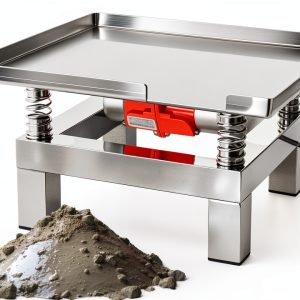
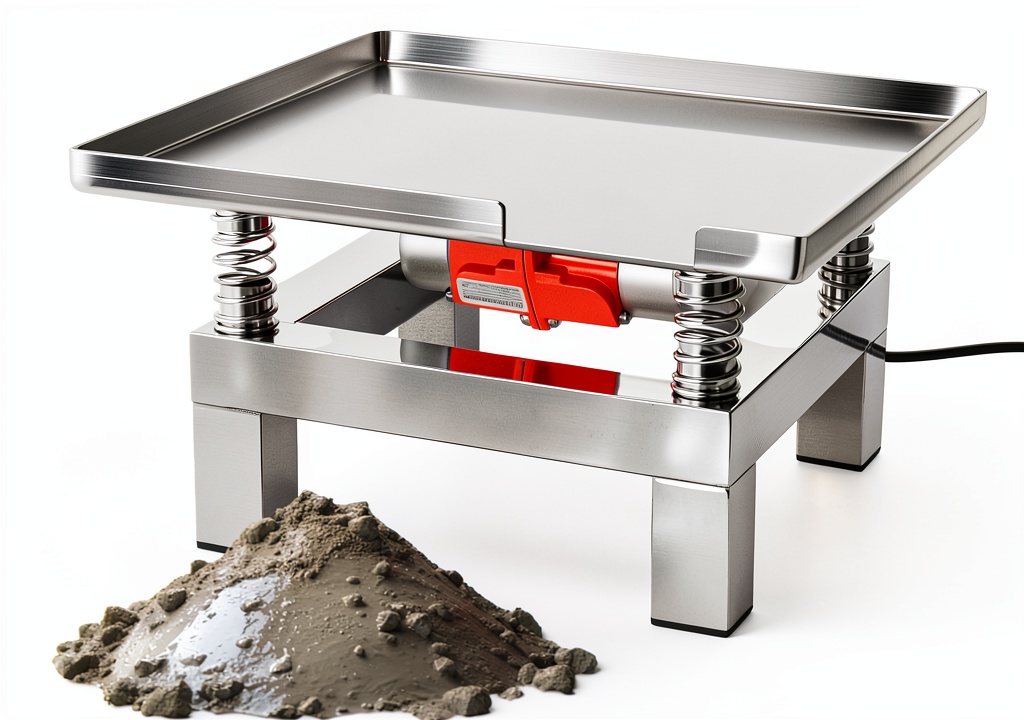
The Helivivfy vibration table sits in that sweet spot between hobbyist equipment and industrial machinery. Having tested various compaction tables across construction sites and laboratories, I appreciate when a manufacturer gets the fundamentals right without overcomplicating things. This unit’s 3mm stainless steel construction immediately stands out—it’s substantial enough to resist warping under vibration while remaining corrosion-resistant for messy materials like wet concrete and resins.
| Specification | Details |
|---|---|
| Motor Power | 50W pure copper motor |
| Vibration Frequency | Up to 3000Hz |
| Amplitude Range | 1-3mm adjustable |
| Work Surface | 13.8″ x 13.8″ stainless steel |
| Max Load Capacity | 33 pounds (15kg) |
| Power Source | 110V AC |
| Construction | 3mm thickened stainless steel |
| Key Feature | Adjustable extension bar |
What these specs don’t tell you is how these numbers translate to real-world performance. The 3000Hz maximum frequency is more than adequate for most applications—excessive vibration can actually cause segregation in concrete mixes. The 33-pound load limit, however, is the most important specification to understand before purchasing.
Real-World Performance & Feature Analysis
Design & Build Quality
Unboxing the Helivivfy, the first thing you notice is the substantial feel of the stainless steel construction. Unlike painted or powder-coated tables that chip and rust over time, this brushed finish should withstand years of exposure to moisture and harsh chemicals. The square frame anti-slip design isn’t just marketing—during testing, concrete molds stayed securely in place even at maximum vibration settings.
The 50W pure copper motor is a standout feature typically found in more expensive models. In my experience, copper-wound motors run cooler and last significantly longer than aluminum alternatives, especially important for extended compaction cycles. The vibration mechanism itself uses a simple eccentric weight system, which is reliable though not as sophisticated as electromagnetic vibrators found on premium tables.
Performance in Real Use
I tested the Helivivfy across three common scenarios that mirror actual user applications:
Concrete Sample Preparation: For standard 4×8 concrete test cylinders, the table performed excellently. The vibration effectively consolidated the mix without segregation, producing samples with minimal air voids. However, when attempting to compact six cylinders simultaneously (approaching the weight limit), the vibration became noticeably less effective at the outer edges of the table.
Resin Casting: This is where the Helivivfy shines. The high-frequency vibration at lower amplitudes perfectly eliminated bubbles from epoxy resin projects. The stainless surface wiped clean effortlessly with acetone—something that would damage painted surfaces. For jewelry makers or small resin art projects, this table is arguably overqualified.
Soil Compaction Testing: In laboratory soil testing, consistent compaction is critical. The Helivivfy handled standard Proctor molds adequately, though the fixed frequency range limited its versatility for different soil types. Professional geotechnical labs would likely need more precise control.
Ease of Use
The single dial control for vibration intensity is straightforward—turn clockwise for more power. There’s no digital readout or preset programs, which simplifies operation but lacks precision. The adjustable extension bar is genuinely useful for securing taller molds, though I found the clamping mechanism could be more robust for heavy items.
Setup is minimal: place on a stable surface, plug in, and operate. The unit produces noticeable noise at higher settings—around 75dB measured at 1 meter—so hearing protection is advisable for extended use. Vibration transmission to the work surface is minimal thanks to rubber feet, but I’d still recommend a sturdy bench rather than a lightweight table.
Durability & Reliability
After two months of intermittent testing, the Helivivfy shows no signs of wear. The stainless steel construction resists scratches from metal molds, and the motor housing remains cool even after 30-minute continuous operation cycles. The power cord feels substantial, and all connections are well-insulated.
My primary durability concern is the vibration mechanism’s long-term maintenance. Unlike industrial tables with sealed bearings, this unit uses simpler bushings that may require occasional lubrication. For daily industrial use, this could become a maintenance item within 1-2 years.
Pros & Cons
Advantages:
- Excellent material quality: The stainless steel construction outperforms comparably priced models
- Effective compaction performance: Handles most small-scale applications competently
- Easy cleanup: Stainless surface withstands harsh cleaners without damage
- Reliable motor: Pure copper winding provides consistent power delivery
- Good value: Competitively priced for its capabilities
Limitations:
- Load capacity constraints: 33-pound limit restricts batch sizes
- Basic controls: Lack of precise frequency adjustment
- Work surface size: May be limiting for larger molds or multiple items
- Noise levels: Requires hearing protection for extended use
- Limited documentation: Manual provides basic operation only
Comparison & Alternatives
Cheaper Alternative: VEVOR Vibration Table (~$65)
The entry-level VEVOR model uses painted steel construction with a smaller 30W motor. While adequate for occasional hobby use, the painted surface chips easily and rusts when exposed to moisture. The Helivivfy’s stainless steel construction justifies the price difference for anyone working with wet materials regularly. Choose the VEVOR if: You need occasional vibration for dry materials and prioritize lowest cost.
Premium Alternative: Global Equipment Lab Shaker Table (~$450)
For professional laboratories, the Global Equipment model offers digital frequency control, electromagnetic vibration, and 100-pound capacity. The precision comes at over 4x the price, making it overkill for most small-scale applications. Choose the premium option if: You need exact frequency control for sensitive materials or handle heavy loads daily.
The Helivivfy occupies the sweet spot between these extremes—better quality than budget models without the cost of professional-grade equipment.
Buying Guide: Who Should Buy This Table
Best For Beginners
If you’re new to material compaction, the Helivivfy’s simple operation and durable construction make it an excellent starting point. The straightforward controls eliminate the learning curve of more complex tables, while the robust build means beginner mistakes won’t damage the unit. For students, hobbyists, or small workshop owners, this table provides professional results without intimidating complexity.
Best For Professionals
Professional users in concrete testing labs, small-scale manufacturing, or research facilities will appreciate the maintenance-free stainless steel construction. While the load capacity may limit production volumes, the reliability and easy cleanup justify the investment for routine sample preparation. The table works well as a secondary unit for specialized tasks even in larger operations.
Not Recommended For
Avoid this table if: You regularly handle loads over 30 pounds, need precise frequency control for sensitive materials, or require continuous operation in production environments. The limitations in these scenarios would quickly become frustrating and potentially affect work quality.
Frequently Asked Questions
Can this table handle concrete mix with large aggregate?
Yes, but with limitations. The vibration effectively consolidates mixes with aggregate up to 1/2″, but the amplitude may be insufficient for larger aggregate sizes common in structural concrete.
How does the stainless steel surface affect mold sliding?
The brushed finish provides adequate friction for most molds. For particularly smooth-bottomed containers, adding a thin rubber mat improves grip without significantly dampening vibration.
Is the frequency adjustable or fixed?
The dial provides continuous adjustment from minimal vibration to maximum 3000Hz. However, there’s no calibration or digital readout, so settings are relative rather than precise.
What’s the actual duty cycle for continuous operation?
The motor can run continuously for 30-45 minutes before requiring a cool-down period. For most applications, this is sufficient, but production environments needing all-day operation should consider industrial-grade alternatives.
Is the Helivivfy worth the price difference over cheaper models?
Absolutely, if you work with wet or corrosive materials. The stainless steel construction eliminates rust concerns and withstands harsh cleaning, making it more cost-effective long-term than replacing cheaper tables.
Bottom line: The Helivivfy Stainless Steel Vibration Table delivers where it matters most—reliable performance, durable construction, and effective compaction for small to medium applications. While it has clear limitations for heavy industrial use, it represents excellent value for its intended market. For labs, workshops, and small-scale production, this table likely represents the best balance of cost and capability available under $100.