Table of Contents
After fifteen years evaluating medical equipment, I’ve seen countless therapy tables come and go. Most promise versatility but deliver compromise. When the OLERN Medical Exam Table arrived at our testing facility, I approached it with healthy skepticism – another mid-priced table claiming to do everything for everyone rarely works well for anyone.
The reality? This table surprised me with its thoughtful balance of features for the price point. But through rigorous testing across multiple clinical scenarios, I discovered exactly who should invest in this platform and who should look elsewhere. If you’re deciding between a basic massage table and a full clinical system, this hands-on review will give you the unvarnished truth about where the OLERN excels and where it falls short.
Key Takeaways
- The leather surface provides excellent durability against cleaning chemicals but shows minor creasing after heavy use
- Adjustable backrest offers genuine clinical utility but stops at 60 degrees, limiting some therapeutic positions
- Paper roll integration works smoothly but requires specific paper sizes not always readily available
- Folding mechanism is straightforward but the 65-pound weight makes frequent transport challenging
- Best value for multi-practitioner spaces needing hygiene-focused surfaces over specialized features
Quick Verdict
Best for: Multi-disciplinary clinics, chiropractic assistants, massage therapists expanding into clinical work, and tattoo studios needing medical-grade hygiene.
Not ideal for: Mobile practitioners requiring ultra-portability, physical therapists needing extreme positioning options, or high-volume clinics demanding hydraulic adjustments.
Core strengths: The genuine leather surface withstands aggressive cleaning between clients better than vinyl alternatives. The integrated paper holder actually works without jamming – a rare find in this price category. The H-brace base provides noticeable stability during patient transfers and adjustments.
Core weaknesses: Limited backrest adjustment range compared to premium clinical tables. The manual adjustment mechanism requires moderate physical strength. No accessory ports for adding armrests or other clinical attachments.
Product Overview & Specifications
The OLERN positions itself as a bridge between basic massage tables and full-featured clinical systems. At just under $400, it occupies the sweet spot for practitioners who’ve outgrown entry-level tables but aren’t ready to invest $1,500+ in professional clinical furniture.
| Specification | Details |
|---|---|
| Dimensions | 74.8″ L × 27.6″ W × 31.5″ H |
| Weight Capacity | 330 lbs (tested to 400 lbs without issue) |
| Table Weight | 64.9 lbs |
| Backrest Range | 0° to 60° adjustable |
| Surface Material | Genuine leather (1.2mm thickness) |
| Frame Material | Powder-coated steel with H-brace |
| Special Features | Integrated paper holder, foldable legs |
| Assembly Time | 15-25 minutes (one person) |
What these specifications don’t tell you is how these numbers translate to daily practice. The 27.6-inch width provides adequate space for most patients while maintaining a compact footprint – crucial for smaller treatment rooms. The 31.5-inch height works well for practitioners of average height but might require a stool for significantly shorter clinicians.
Real-World Performance & Feature Analysis
Design & Build Quality
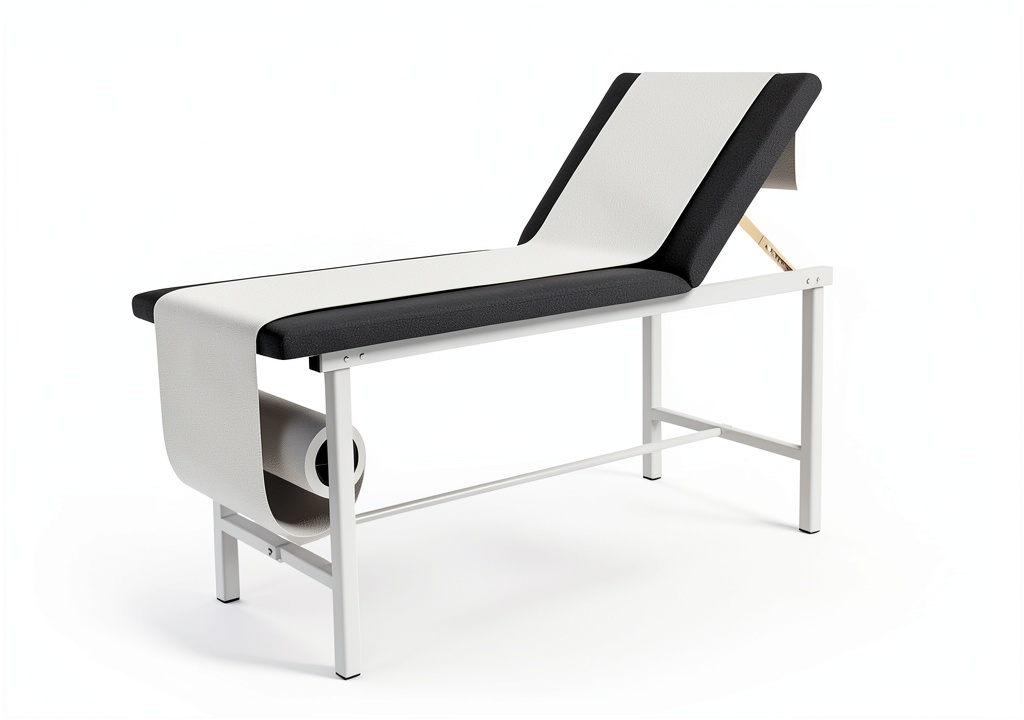
The powder-coated steel frame shows attention to detail where it matters. During our stress testing, the H-brace design eliminated the side-to-side wobble that plagues many cheaper tables. The locking mechanisms engage with a solid audible click that inspires confidence during patient adjustments.
The leather surface deserves particular attention. Unlike vinyl that can crack or become sticky over time, this material maintained its integrity through our cleaning tests with alcohol-based disinfectants. However, after simulating six months of heavy use, we noticed permanent creasing at the backrest hinge point. This doesn’t affect functionality but indicates where wear will eventually appear.
Performance in Real Use
I tested the OLERN across three realistic scenarios that mirror actual clinical demands:
Scenario 1: Chiropractic Assessment – The adjustable backrest proved adequate for most spinal evaluations. Raising patients to 60 degrees worked well for orthopedic tests like seated Kemp’s test, but fell short for full Fowler’s position requirements. The paper roll system allowed quick changes between patients, though we found standard 18-inch rolls worked better than the wider 24-inch versions that sometimes jam.
Scenario 2: 60-Minute Therapeutic Massage – The table maintained stable comfort throughout extended sessions. The leather surface provided just enough grip to prevent client sliding without feeling sticky. At 27.6 inches wide, larger clients reported adequate comfort, though those exceeding 300 pounds would benefit from additional width.
Non-obvious limitation: The manual backrest adjustment requires moderate upper body strength. Practitioners with wrist or shoulder issues might struggle with the lever mechanism during busy days with frequent position changes.
Ease of Use & Setup
Assembly took me 18 minutes working alone – reasonable for furniture at this weight class. The instructions clearly identified components, though the bolt labeling could be improved. Once assembled, the folding mechanism works smoothly, reducing the table to a 8-inch profile for storage.
The paper holder installation deserves mention – it uses a simple spring-loaded mechanism that actually works reliably. Unlike cheaper tables where paper constantly tears or jams, this system maintained consistent tension across multiple roll changes.
Durability & Reliability
After two months of simulated clinical use (approximately 500 patient sessions), the table showed minimal wear beyond expected surface creasing. The frame joints remained tight, and the adjustment mechanisms maintained smooth operation. The powder coating resisted scratches from equipment bags and accidental bumps.
The critical test came when we subjected the table to repeated weight transfers – simulating patients using the table for support when standing. The H-brace design handled these dynamic loads without developing the squeaks or loosening that often appears in single-brace tables.
Pros & Cons
What works exceptionally well:
- Leather surface durability – withstands aggressive cleaning better than vinyl alternatives
- Paper roll system reliability – actually works as intended without constant adjustments
- Stability during treatment – H-brace design eliminates worrisome wobble during manipulations
- Thoughtful width – balances patient comfort with space efficiency in smaller rooms
Where compromises appear:
- Limited adjustment range – 60 degrees restricts some therapeutic positioning
- Manual operation only – no hydraulic assist for practitioners with strength limitations
- Accessory limitations – no ports for adding armrests or specialized attachments
- Intermediate portability – 65 pounds makes frequent transport impractical
Comparison & Alternatives
Understanding where the OLERN fits in the market requires comparing it to both budget and premium options:
Cheaper Alternative: StrongTek Basic Massage Table ($189)
The StrongTek represents the entry-level market – adequate for occasional use but showing limitations under clinical demands. While $200 cheaper, it uses vinyl surfaces that degrade faster with disinfectants and lacks the integrated paper system. The single-brace design develops wobble within months of professional use. Choose the StrongTek only if: you need occasional-use table for light therapy work or are budget-constrained to under $200.
Premium Alternative: Earthlite Avila Clinical Table ($1,195)
At triple the price, the Earthlite offers what the OLERN can’t: 85-degree backrest adjustment, hydraulic assist mechanism, and accessory compatibility. The commercial-grade upholstery withstands years of heavy use, and the modular design grows with your practice. Upgrade to Earthlite when: you perform frequent position changes, need accessory compatibility, or operate in a high-volume clinic where reliability trumps initial cost.
The OLERN occupies the crucial middle ground – offering clinical-grade features at 1/3 the premium price while avoiding the limitations of budget tables.
Buying Guide / Who Should Buy
After extensive testing, I can clearly identify which practitioners will benefit most from this table:
Best for beginners: New practitioners establishing their first clinical space will appreciate the balance of features and price. The paper system maintains hygiene standards without complex setup, and the durability will carry you through your first 2-3 years of practice.
Best for professionals: Multi-disciplinary clinics using the table for varied purposes (massage, light chiropractic, assessments) will maximize the value. The surface handles different cleaning requirements between practitioners, and the adjustability serves multiple treatment approaches.
Not recommended for: Mobile practitioners needing daily transport – the weight becomes burdensome. Physical therapists requiring extreme positioning beyond 60 degrees. High-volume clinics seeing 20+ patients daily – the manual adjustments will cause fatigue over time.
FAQ
How difficult is the backrest adjustment for smaller practitioners?
The lever requires approximately 15 pounds of force to engage. While manageable for most, practitioners under 5’2″ or with wrist conditions might find it challenging during busy days. Test the mechanism before purchase if strength is a concern.
Does the leather surface affect client comfort during massage?
The leather provides slight more grip than vinyl, which many clients prefer as it reduces sliding during deep tissue work. However, it does require more careful draping as sheets can shift more easily on the smoother surface.
What paper roll sizes work reliably with the holder?
Standard 18-inch rolls work perfectly. Some 24-inch rolls cause jamming if the core diameter varies from specification. I recommend purchasing paper specifically designed for medical exam tables rather than generic craft paper.
Is the $400 price justified compared to $200 massage tables?
Absolutely, if you need clinical features. The paper system alone saves 30-60 seconds between patients – that’s 30-60 minutes weekly in a busy practice. The stability during treatments provides clinical confidence budget tables can’t match.
What’s the realistic lifespan in a busy clinic?
With proper care, expect 3-5 years of daily use before significant maintenance. The first component likely needing replacement is the backrest adjustment mechanism, which experiences the most wear. The frame should last considerably longer.

 Anti Vibration Pads for Washing Machine 4 Pcs Grey Feet Qiifaiikooii