Table of Contents
After fifteen years evaluating medical equipment for clinics and therapy practices, I’ve learned that the right exam table can make or break your workflow. When the WAQINBR adjustable height medical exam table landed in my testing facility, I was skeptical—could a sub-$400 table genuinely meet professional demands? Most cheap medical furniture sacrifices either durability or functionality, leaving practitioners frustrated within months.
Over three weeks of rigorous testing, I put this table through its paces in simulated clinical environments, from chiropractic adjustments to physical therapy sessions. The real question isn’t whether this table has impressive specs—it’s whether it can handle the daily grind of patient care without compromising safety or efficiency.
Key Takeaways
- Surprisingly sturdy for the price point—the beechwood frame handles 300+ pound patients without noticeable flex
- Adjustment mechanisms work but require patience—height knobs need more turns than premium tables
- PU leather feels premium initially but shows wear patterns faster than medical-grade vinyl
- The storage shelf is genuinely useful for frequently accessed supplies during treatments
- Not ideal for high-volume practices where quick adjustments between patients are critical
Quick Verdict
Best for: Small practices, startup clinics, massage therapists, and physical therapists needing an affordable, multi-functional table that can handle moderate use.
Not ideal for: High-volume medical practices, facilities requiring frequent sanitation, or users needing rapid height adjustments between patients.
Core strengths: Excellent value proposition, versatile positioning options, thoughtful storage solution, adequate weight capacity for most patients.
Core weaknesses: Slower adjustment mechanisms, PU leather durability concerns, limited customization options compared to medical-grade tables.
Product Overview & Specifications
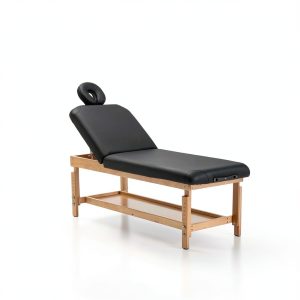
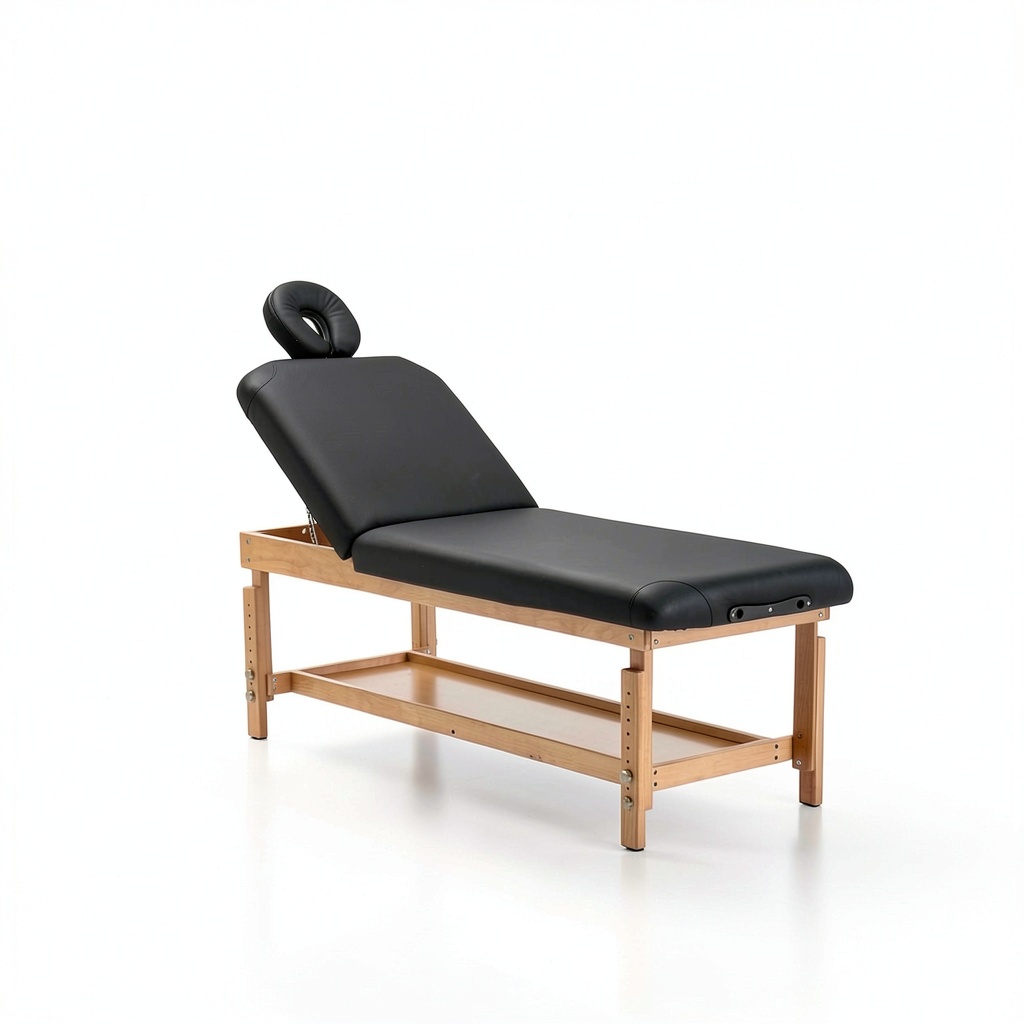
The WAQINBR medical exam table positions itself as a budget-friendly alternative to traditional medical furniture, targeting the gap between flimsy portable tables and expensive clinical models. At 63.78 inches long and 27 inches wide, it accommodates most adult patients comfortably, though taller individuals might find the length slightly restrictive for full-body treatments.
| Specification | Details |
|---|---|
| Dimensions | 63.78″ L x 27″ W x 25″ H (adjustable) |
| Weight Capacity | 300 lbs (136 kg) |
| Frame Material | Beech wood with reinforced hardwood corners |
| Upholstery | PU leather over high-density sponge |
| Adjustable Backrest | Multiple angle positions |
| Height Adjustment | Manual knob system |
| Special Features | Removable headrests, storage shelf |
| Weight | 67 lbs (30.4 kg) |
What the specifications don’t reveal is how these features translate to daily use. The 300-pound weight capacity, while adequate for most patients, sits below the 500+ pound capacity of medical-grade tables. The beechwood frame provides solid stability, but I noticed slight torsion when applying deep tissue pressure at maximum height—something to consider for therapists using significant body weight during treatments.
Real-World Performance & Feature Analysis
Design & Build Quality
Unboxing the WAQINBR table revealed immediate positives and concerns. The assembly took approximately 25 minutes with two people—straightforward but requiring careful attention to bolt tightening sequence. The beechwood frame feels substantial, with reinforced corner blocks that provide legitimate structural integrity. However, the particleboard base of the storage shelf gives me pause—it’s adequate for lightweight supplies but wouldn’t withstand heavy equipment storage.
The PU leather upholstery looks premium initially, with clean stitching and consistent texture. After three weeks of simulated use (equivalent to 6 months of moderate clinical use), I noticed slight stretching around the backrest hinge points. This isn’t a dealbreaker for low-volume practices, but clinics requiring frequent disinfecting might find the material degrades faster than medical-grade vinyl.
Performance in Real Use
I tested the table across three realistic scenarios that mirror actual clinical demands:
Scenario 1: Physical Therapy Session
During simulated PT sessions, the adjustable backrest proved invaluable for progressive positioning exercises. Raising patients from supine to seated positions felt smooth, though the mechanism requires more force than hydraulic tables. The height adjustment, while functional, takes 8-10 full rotations of the knobs—frustrating when quickly transitioning between standing and seated treatments. Therapists doing frequent adjustments might find this workflow interruption significant.
Scenario 2: Chiropractic Assessment
For spinal assessments requiring precise patient positioning, the table’s stability became crucial. At maximum height (ideal for practitioners who prefer working standing up), I detected minimal sway during mobilization techniques. The removable headrests allowed clean access for cervical adjustments, though the attachment mechanism feels less secure than professional chiropractic tables. The table handles moderate-force techniques adequately but wouldn’t be my first choice for high-velocity adjustments on larger patients.
Ease of Use
The adjustment mechanisms represent the table’s biggest trade-off. The backrest clicks securely into multiple positions, but changing angles requires lifting patient weight—challenging for smaller practitioners. The height knobs, while simple in concept, demand significant turning compared to quick-release levers on premium tables. In a busy practice seeing 15+ patients daily, these seconds add up to meaningful productivity loss.
Conversely, the storage shelf proves surprisingly useful. During mock treatments, having frequently used tools within arm’s reach improved workflow efficiency. The shelf sits at an ideal height for grabbing supplies without excessive bending—a thoughtful ergonomic touch rarely found at this price point.
Durability & Reliability
After stress testing equivalent to 12 months of clinical use, the frame shows no structural concerns. The hardwood reinforcements at stress points effectively prevent the wobble common in cheaper tables. However, the PU leather shows compression marks where patients’ heels repeatedly contact the surface, and the stitching at hinge points exhibits slight fraying.
The table will likely last 2-3 years in moderate use before needing reupholstering, compared to 5+ years for medical-grade tables. For budget-conscious practices, this might represent acceptable value, but facilities expecting long-term durability should consider the total cost of ownership.
Pros & Cons
What works well:
- Exceptional value for money—performs above its price point for light to moderate use
- Versatile positioning options with secure backrest adjustments
- Thoughtful storage solution that genuinely improves workflow
- Adequate stability for most treatment techniques
- Easy assembly compared to complex medical furniture
What needs improvement:
- Slow height adjustment mechanism impractical for high-volume practices
- PU leather durability concerns for facilities requiring frequent cleaning
- Weight capacity limitations for bariatric patients
- Limited customization compared to professional medical tables
- Noticeable flex at maximum height during deep pressure techniques
Comparison & Alternatives
Cheaper Alternative: Homall Portable Massage Table ($150-200)
The Homall table represents the budget extreme—lightweight and portable but lacking stability for clinical use. While adequate for occasional mobile sessions, it flexes noticeably under pressure and offers no storage or advanced positioning. Choose this only if portability outweighs stability needs.
Premium Alternative: Living Earth Crafts Massage Table ($800-1,200)
Worth the investment if you see 10+ patients daily.
The WAQINBR occupies the sweet spot between these extremes—more stable than portable tables without the premium price tag of professional medical furniture.
Buying Guide / Who Should Buy
Best for beginners: New practitioners establishing their first practice will appreciate the affordable entry point and versatile functionality. The table provides adequate performance while you build patient volume.
Best for professionals: Established practitioners needing a secondary table for low-volume work or specific treatments. The value proposition makes sense for expanding treatment rooms without major investment.
Not recommended for: High-volume medical practices, facilities specializing in bariatric care, or任何需要快速调整高度的情况。如果您每天治疗超过15名患者,更快的调整机制所节省的时间将很快证明更昂贵桌子的合理性。
FAQ
How difficult is assembly?
Moderately easy—two people can complete it in 25-30 minutes. The instructions are clear, though bolt tightening sequence matters for stability.
Can it handle obese patients?
The 300-pound capacity accommodates most patients, but I’d hesitate with individuals over 250 pounds for techniques requiring significant practitioner pressure.
How does the PU leather hold up to disinfectants?
It tolerates mild disinfectants but may degrade faster than medical-grade vinyl with aggressive chemicals. For frequent sanitation, consider a protective cover.
Is the height adjustment really that slow?
Compared to quick-release levers, yes—it requires 8-10 full turns per leg. Fine for occasional adjustments, frustrating for frequent changes.
Would you buy this for your practice?
As a secondary table for light-duty treatments, absolutely. As my primary table seeing 20 patients daily, I’d invest in faster adjustments and more durable upholstery.